
As Organic September draws to a close, Phil Sumption reflects on ORC’s work on the organic market.
Organic September is a ‘nationwide celebration of organic food, farming and sustainable living.’ The focus this year has been on encouraging everyone to try organic and see the difference it can make. The campaign is a useful marketing opportunity in the organic producer and retail calendar, at a time when homegrown produce is bountiful, and a chance to raise consciousness about the positive benefits of organic farming.
Two years ago I wrote an article for the Countryside Jobs Service marking Organic September setting out why organic farming is still important and relevant as we battle biodiversity and climate crises.
ORC’s vision is to deliver the transition to naturally healthy and resilient farming systems. Organic farming has been primarily the vehicle through which we have delivered that change. Over the last 46 years the ORC has delivered pioneering research that has helped transform the organic sector in the UK and beyond.
Promoting and enabling the adoption of organic farming techniques and systems on its own is not enough. Market dynamics are a key driver of the success and continued development of the organic sector. ORC – known as Elm Farm Research Centre (EFRC) until 2006 – has a large body of work on organic markets, supply chains and the economics of organic farming.
Some of the main areas we have worked on are:

EFRC was a partner in the Defra-funded Study of the Market for Organic Vegetables (OF0307), led by HDRA in 2001–03. The project collected data from UK packers and wholesalers on the volume, value and sources of organic vegetables, and compared this with UK production.
In 2004 Organic Centre Wales (OCW) – a partnership involving ADAS Wales, the Institute of Rural Sciences at Aberystwyth University, IGER and EFRC – commissioned research from the Soil Association. The study Improving market intelligence for Welsh organic horticulture estimated the Wales and Welsh borders organic food market at around £64 million, with organic fruit and vegetables accounting for approximately £20.5 million. It surveyed Welsh organic horticultural production and identified opportunities to improve supply to the growing market.
But today, despite market growth, the area of organic vegetables (including potatoes) grown in the UK in 2025 was less than in 2003, with the area grown peaking in 2008 (Source: Defra).
In 2007 OCW secured funding for reviews of the dairy, red meat, arable and horticultural sectors. Roger Hitchings of ORC led the horticulture review and co-authored the arable review. The reviews looked at the state of each market and, importantly, the balance between supply and demand. The arable review addressed one of the least well-surveyed parts of the Welsh organic sector. It looked at production, markets and the different uses and marketing routes for Welsh organic cereals and other arable crops. ORC carried out a survey of English organic producers in 2013, with 223 producers responding.
In 2015 Susanne Padel and Catherine Gerrard of ORC, with Finn Cottle of the Soil Association and Dafydd Owen of OCW, produced a detailed assessment of the Welsh organic retail market. It combined supermarket sales data with surveys of independent retailers, processors, box schemes, farm shops and other Welsh organic businesses, together with Welsh producer survey data. The study estimated the value of the Welsh organic market and provided a benchmark for monitoring its development over time.
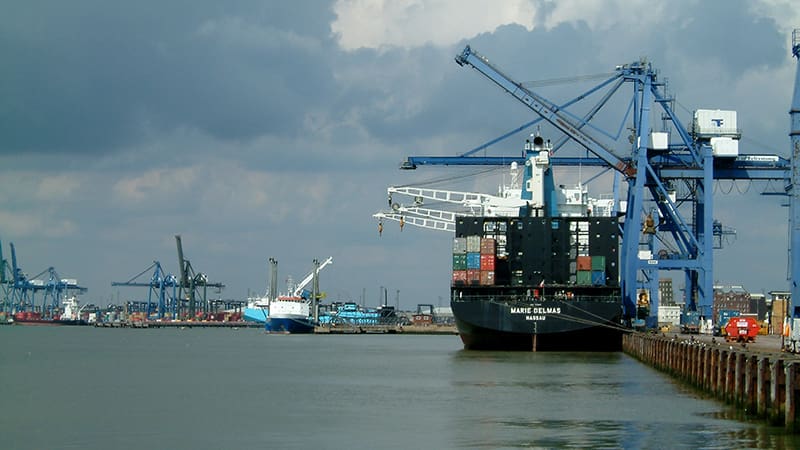
In 2006 EFRC contributed to research examining the relationship between growing UK demand for organic food and domestic production. Its work highlighted the risk that UK production could fail to keep pace with consumption, increasing reliance on imports. The research also considered how retailers, processors and suppliers could develop longer-term relationships and more realistic farm-gate prices. Read The quest for more home-produced organic food in ORC Bulletin 86.
This is an ongoing theme today, we still haven’t managed to meet demand for organic food 20 years later. Domestic organic production is substantially below domestic organic demand, with imports playing a major role. The gap is particularly relevant for organic horticulture (see above) and arable crops, while the UK has a relatively substantial organic livestock sector based on its large area of organic grassland. The UK continues to lag behind the European Union with its ambitious targets to get 25% of agricultural land under organic farming by 2030. We welcome Scotland’s Organic Action Plan and look foward to an Organic Action Plan for England which we hope will address these issues.
ORC led work in the European OrganicDataNetwork project to identify organisations collecting organic market data, assess how data were collected and improve its availability and quality.
Better Organic Business Links (BOBL) led by OCW and funded by Welsh Government and the EU aimed to increase demand and markets for Welsh organic produce, particularly the home market. ORC was one of the project partners, alongside the Soil Association, ADAS and Food Ethics Council. The project deliberately moved beyond farm production to address supply chains, innovation, consumer understanding and market development (See Supply Chain Efficiency Scheme Evaluation – Case studies).
In the Distribution of the added value of the organic food chain project we helped to to identify and analyse the distribution of added value in organic supply chains in the European Union.The main challenge for organic farmers and other market players was identified as not simply related to the question of whether or not to deal with supermarkets, but rather how to develop collaboration, physical infrastructures within specific sectors and improving the integration of supply chain operations.

ORC researched why consumers bought organic food and differences between markets, including the UK and Europe. Research examined factors such as health, absence of pesticides, taste, animal welfare and support for farmers, as well as which organic products consumers bought. For an entertaining take on the ‘organic consumer’ read Lawrence Woodward’s address to the IFOAM Conference in Argentina in 1998: Consumers’ Perceptions of Organic Food Quality.
More recently, in 2024, ORC and UK Organic’s Consumer Insights Report provided a clear and detailed picture of UK consumers and their relationship with organic products and farming. Among the report’s findings was that contrary to common belief, the consumers most committed to purchasing organic products – dubbed ‘Organic Enthusiasts’ – are not necessarily the most affluent.
ORC has provided research and advice on the financial performance of organic businesses, costs, prices, market channels, direct selling, processing and supply chains. This is reflected in our training and information work, including the Organic Farm Management Handbook.
ORC has worked with Sustain’s Bridging the Gap programme to explore how organic fruit and vegetables can become more accessible to people on lower incomes while creating stronger markets for farmers. ORC contributed to research into consumer attitudes to organic food, including polling and qualitative research, and was commissioned with the University of Portsmouth to evaluate the economics of 10 pilot projects. This work assessed the benefits of interventions such as subsidised organic produce, including impacts on consumers, farmers and the environment. ORC’s research is helping identify practical ways to strengthen farmer-focused supply chains and inform policies that could expand access to organic food.

For ORC’s current projects, see Business and Markets
Promoting organic produce has become more challenging since UK Organic (formerly the Organic Trade Board) ceased operations and folded in July 2025 after failing to meet post-Brexit funding targets. Promotional responsibilities of UK Organic, including Organic September were transferred directly to the Soil Association. They do a great job.
The title of this article is not intended to belittle that work, but to emphasise the need for an ongoing relationship with the organic consumer – or citizen – and for a commitment to build and grow the organic sector, not just the market. The continuing gap between UK organic demand and production, in the context of climate, cost of living, biodiversity and food security crises means there is still a lot of work to do.