
In the Feed the Soil project we’re working with farmers across the UK who are using many different methods to process their farm waste. ORC’s Principal Researcher – Soil – Dr Julia Cooper reports from the vermicomposting trials.
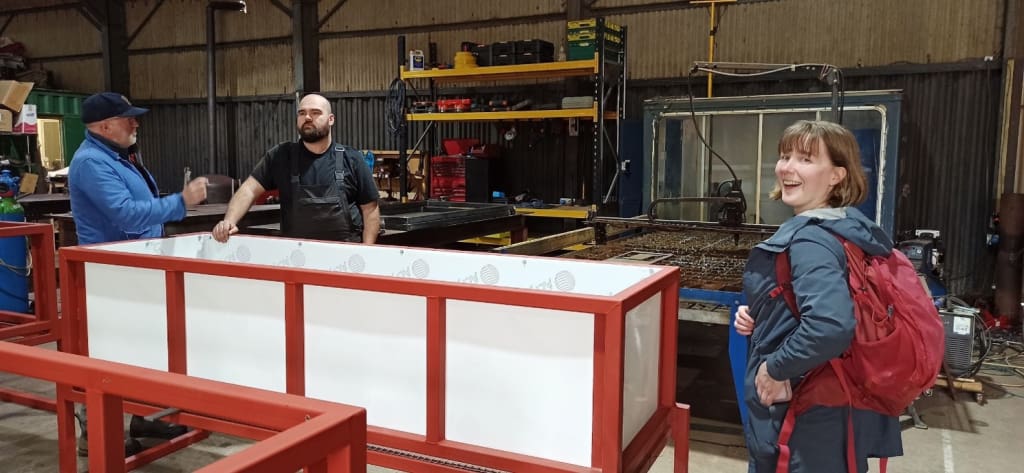
We’ve been fortunate to connect with Guy Douglas at Southfield farm in Northumberland who has been trialling vermicomposting using worm bins (4 ft x 4 ft x 8 ft; see Figure 1) fabricated by a local metal worker (G Fabrications of Alnwick). Guy sourced some funds from Farming in Protected Landscapes to build the bins and we have provided the worms (Eisenia fetida, better known as red wrigglers).
We’ve been monitoring the worm growth and vermicomposting process for the past year, comparing starting mixes that included different proportions of bokashi compost, farmyard manure, coffee grounds, coir and cardboard. Bins have been misted with water or EM (effective microorganisms) to assess how the added microorganisms affect the vermicomposting process.
Last week, 12 months after the worm bins were set up, I visited Southfield to check on progress and collect some samples. We’ve sent the compost out for analysis for nutrients and biological properties to add to our growing database on compost properties. Until now, we’ve seen some general patterns in our database, e.g. vermicompost has a higher percentage of total N in an available form (~15%), with most of that N in the form of nitrate. But still see that the degree of variation in characteristics among the aerobic composting methods we’re studying is primarily linked to feedstocks, rather than the composting method.

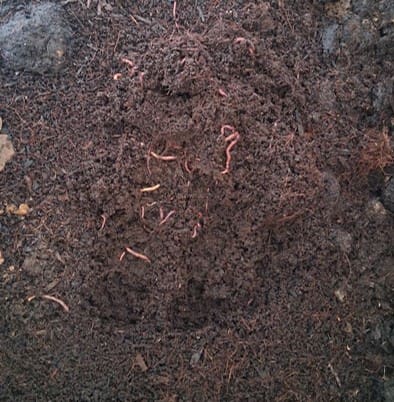
A word on terminology – vermicast is the pure, digested material excreted by earthworms. Vermicompost is the nutrient-rich organic material produced through the process of vermiculture that may include vermicast as well as components of the original feedstocks at varying stages of decomposition. For more info on the many different types of composting and terminology, check out our recent review in the Journal Next Research
In the coming months we’ll be compiling more information on composting systems and compost properties as we develop our Feed the Soil knowledge hub and decision-making tool.