
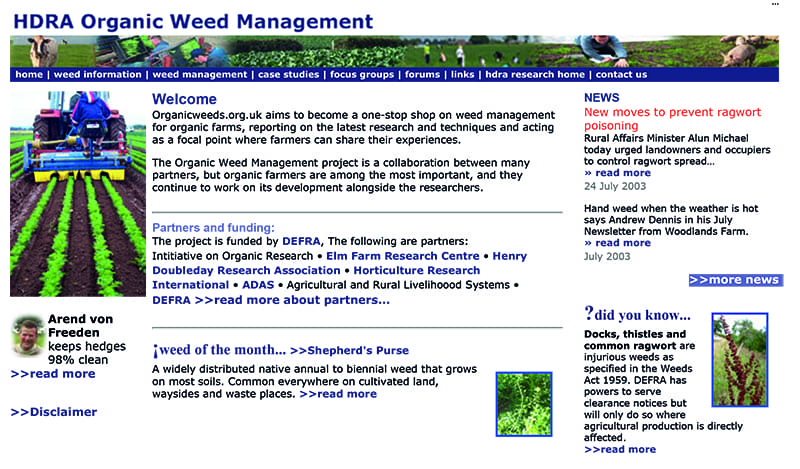
One of the projects that I was most proud to have worked on in my career was entitled the Participatory investigation of the management of weeds in organic production systems. This was a four-year Defra-funded project, which ran from 2002-2006 led by HDRA (now Garden Organic), in collaboration with Elm Farm Research Centre (as ORC was then – see Our story), ADAS, Horticulture Research International, and Agricultural and Rural Livelihood Systems (David Gibbon). At the time I was working as a researcher at HDRA, while also an adviser at Elm Farm through the Organic Conversion Information Service (See: Organic advice and conversion – Research Digest.

This was the first Defra-funded participatory project in the UK, bringing farmers, researchers and other stakeholders together, to establish how a project can be of direct practical use on working farms. The project aim was “…..to define weed problems together with organic farmers and growers, propose ways of addressing these problems, and then research solutions in order to arrive at the most appropriate for use in organic systems.” The approach taken was that all participants – farmers, advisers and researchers – should have equal voices in the design, planning and implementation of the project.
The first meeting in December 2002 packed the Doubleday Hall at Ryton Organic Gardens to capacity (70% of attendees were farmers) and as researchers it felt edgy – we were about to let farmers take charge of the research agenda! A free flow of ideas was encouraged by informal seating and varied discussion groups. As well as recording the outcomes of both general and themed workshops, facilitators also received information about weed problems from farmer postings on themed notice-boards around the venue.
The farmers’ overwhelming request was for more information and communication, that is clear and easy to use. They wanted access to research results which existed in the scientific community, but have not reached farmer level, on subjects such as weed seed viability and acceptable thresholds of individual weeds. They were also eager to pool their own experiences and knowledge.
The route that they recommended is one which is commonly used in research. Farmers felt the project should begin with a desk study before progressing to practical projects. They wanted to see on-farm monitoring of existing weed strategies, which could then be trialled on a wider basis on small on-farm plots.
As a result of the meeting three themed groups with farmer and researcher members were set up to address information collation and dissemination, docks and perennial weeds and systems issues. One of the basic demands for farmer involvement was that gatherings should have a hearty lunch, including a pudding!
Margi Lennartsson, head of HDRA’s Research and Development Department at the time said: “Uptake of research findings is slow at best. At worst they never get taken up, and are often not applicable on farms. By inviting farmers and all stakeholders to take part we should able to overcome this. We will find the problems together, tackle them together, and the results should be easier to disseminate.”
There was a hugely positive energy from engaging with farmers and growers, the peer to peer learning and the valuing of farmer knowledge. Farmer workshops, open days (18 in total) and focus groups throughout the project strengthened communication between farmers and researchers ensuring research addressed practical needs. Around 200 farmers were engaged at some level, with roughly 50 actively involved from the outset. The project carried out on-farm and on-station trials, developed through farmer and stakeholder input, investigating practical solutions to priority weed problems, particularly problematic perennial weeds such as docks and creeping thistle.
Getting Bill Bond, a weed scientist for over 30 years who had been involved in many aspects of weed research in both conventional and organic horticulture, on board was a masterstroke. His encyclopaedic knowledge meant that we were able to extract and make available to farmers, growers and others as much information as possible on weeds and weed control from the scientific literature and commercial publications (grey literature). The outputs were impressive and are still a very useful resource more than 20 years later. We learnt early on that what farmers wanted (at the time) was easily digestible factsheets, preferably no longer than 2 sides of A4 that could be read over a cup of tea or coffee at the kitchen table. So, scientific reviews on particular weeds, management in specific crops and systems, and cultural and direct techniques of managing weeds were condensed into that format. Much can still be accessed through Agricology and the Garden Organic knowledge hub. These resources have outlasted the book Weed Management for Organic Farmers, Growers and Smallholders – a Complete Guide by Gareth Davies, Becky Turner and Bill Bond, published by Crowood Press in 2008, which condensed knowledge from the project, but is now out of print.
One of the main take-aways from the project for me was the importance of understanding the biology of particular weeds, in order to find out why it is a problem (peak emergence, spreading mechanisms, competition etc), together with the need to analyse your farming system to see where the opportunities exist to re-dress the balance in favour of the crop. Weed ‘problems’ require a deep understanding of land history, timing and spatial context. Each farm system is in some senses unique. Farmers and growers do a lot of practical experimentation on their farms (which includes observation, informal investigation and simple comparisons (i.e. experiential learning). This can be supported by researchers and advisers providing information, monitoring, and devising ways in which farmers can do some of their own assessments by using qualitative indicators such as photographs and scores.
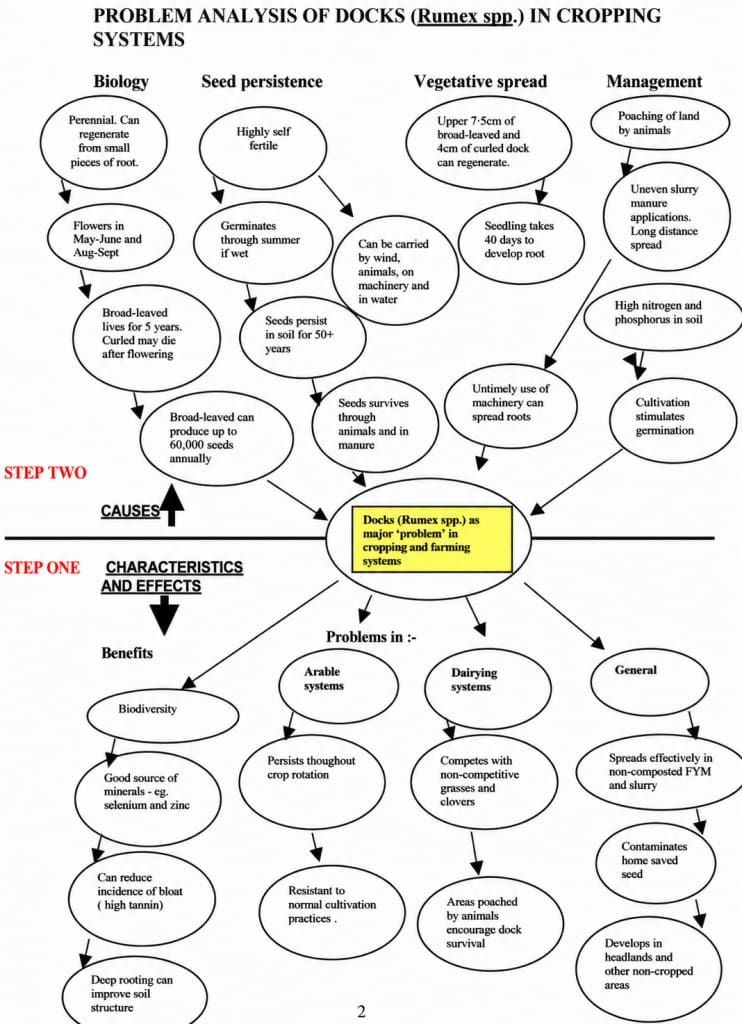
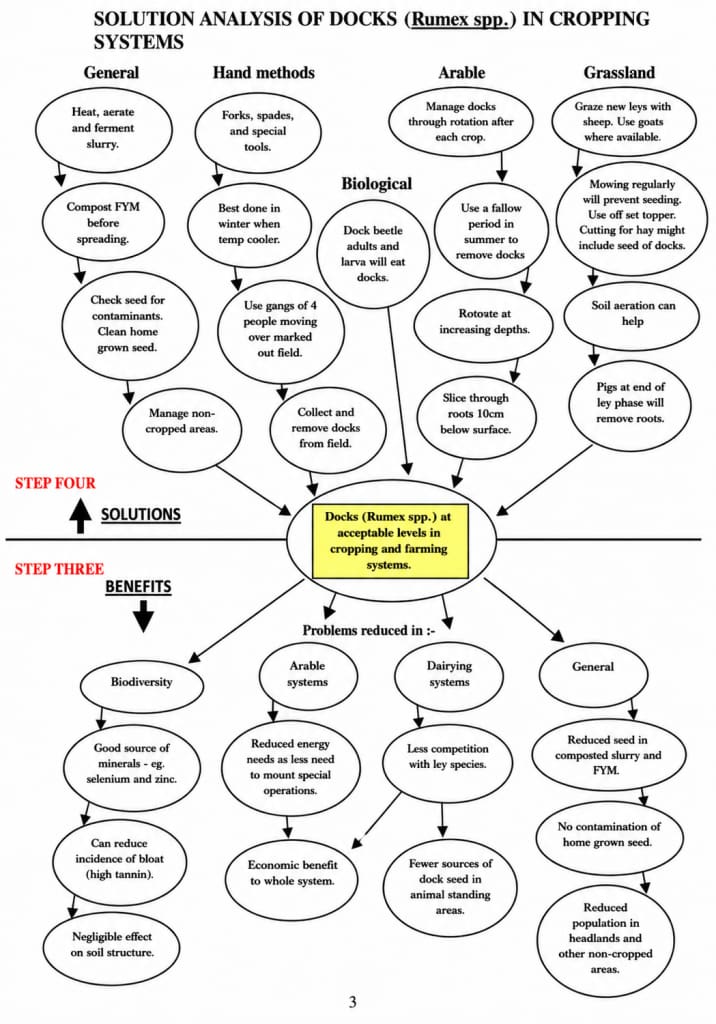
The project also demonstrated the power of getting a group of farmers together with researchers and working together. As David Gibbon wrote in Tales from an Itinerant Agronomist (2018): “Our small farmer workshops were successful and even attracted conventional farmers as they said some chemical methods were not successful and they needed other ideas.” Farmers valued having access to a large volume of information and opportunities for positive participation. Being part of a group increased their confidence and provided inspiration, while also raising awareness of weed problems, including how they are perceived, their potential causes and possible solutions. They appreciated being offered a range of solutions and options, including many effective ‘small’ answers that could be implemented in practice. The project also helped establish valuable links with researchers and advisors and encouraged farmers to ask new questions and explore further possibilities.
Though a few Defra projects followed that incorporated participative elements (e.g. Developing a participatory approach to seed production and varietal selection), Defra budget cuts and the loss of a ring-fenced organic research budget meant that it was not the new dawn that we felt it could have been. Though Defra should be praised for commissioning the project, they took a back seat and communicated that they didn’t consider themselves to be stakeholders in the project. David Gibbon wrote in 2018: “At the end of the four-year programme Defra said that the next round of research on weeds would be based on research stations as they wanted to see experiments and the results of formal trials of weed control methods. This is symptomatic of the way in which organic farming has been treated by the Ministry and the main farming union for many years, and contrasts with the way organic farming is regarded in the rest of Europe.”
However, ORC is committed to working with farmers and other stakeholders to identify problems, co-create knowledge and work towards practical and applicable solutions for organic farming systems. See Ensuring research relevance through participation. The Organic Weed Management project laid the path for Innovative Farmers (ORC is a partner) and farmer-led research through ADOPT to follow.
Further information: