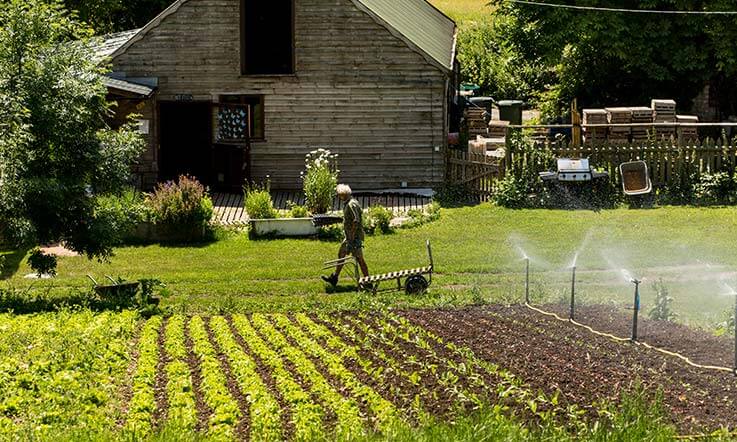

Being a farmer who relies on grass growth for production isn’t getting any easier. Both 2025 and 2026 were drier than average for most of the summer, forcing many farmers to abandon their third or fourth silage cuts. Meanwhile, this year’s disruptions to shipping in the Middle East have had knock-on effects on fertiliser prices further squeezing farmers’ bottom line. If extreme weather and uncertainty in geopolitics is becoming the norm, reducing reliance on purchased fertiliser may be one way to reduce costs and improve farm resilience. Dr Julia Cooper writes.
In the GreenGrass project we are trialling different interventions and strategies to reduce N fertiliser use on grass. For the past two seasons we’ve been testing products including biostimulants and slurry additives as well as exploring old-fashioned N-fixing legumes as ways to reduce N fertiliser use. In the first season of the project (2025) we focused activities on a trial site at Newcastle University’s Nafferton farm. This continued in 2026, but we also added two more sites in the southwest and an organic farm in East Sussex to help us understand how grass-based systems can be productive with no N fertiliser at all.
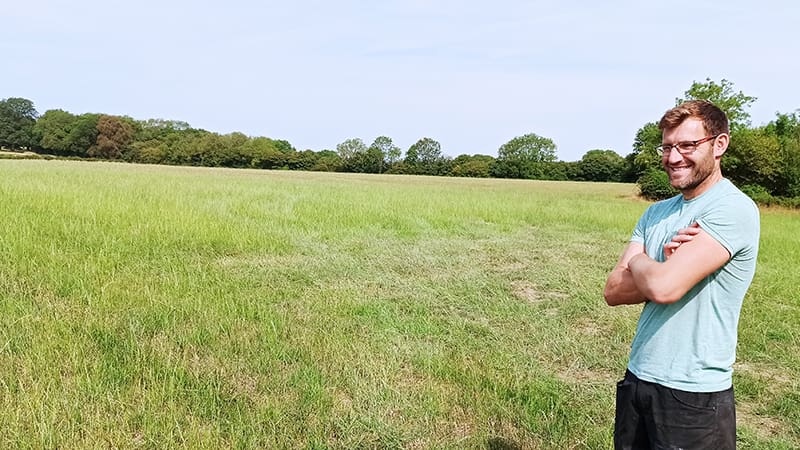
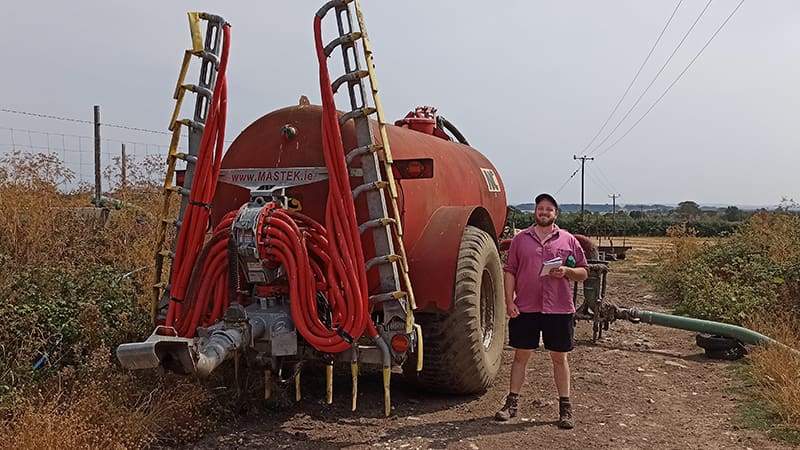
Throughout this season we’ve been visiting farmers and keeping up on WhatsApp with their trials. Matt Haines at Westcombe Farm in Somerset agreed to try out a nitrification inhibitor additive in his slurry tank to test if it would improve nitrogen supply to his grass and efficiency of uptake. Data is still being processed, but initial findings are positive.
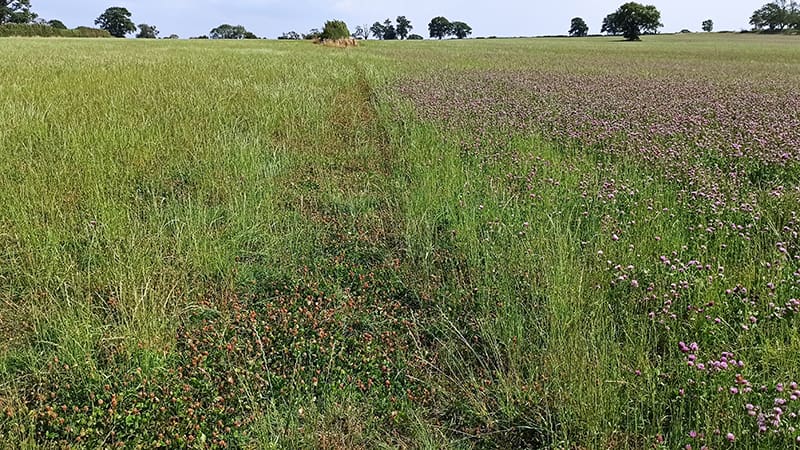
David Cotton at Bridge Farm also in Somerset offered to provide data on his red clover ley which turned out to be a clear winner under this year’s drought conditions. David managed to get a third cut of hay off the red clover while growth in the ryegrass had fizzled out by July.
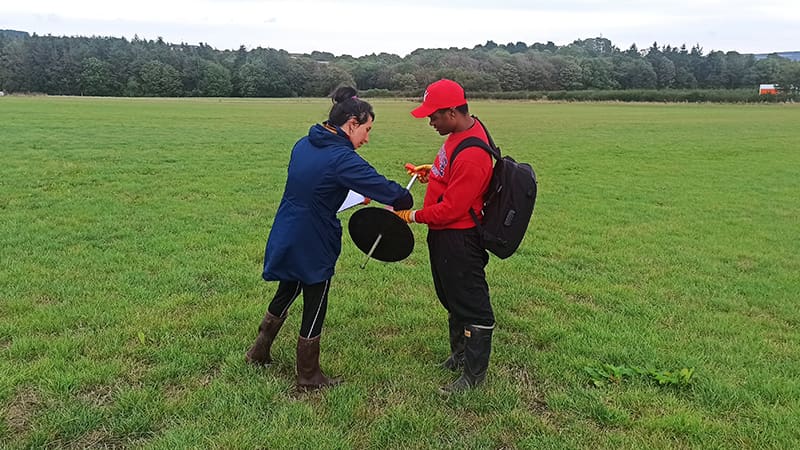
At Nafferton Farm we have worked with PhD student Munja Bordrain to understand how granular and foliar N sources combined with biostimulants affect sward growth. This replicated trial will provide robust evidence on the effects of these products on yields and feed into economic and GHG emissions modelling.
As well as considering the effects of these approaches on forage yields, we’re using Trinity AgTech’s Sandy tool to model greenhouse gas emissions from the different systems. Our Business and Markets Researcher Rowan Dumper-Pollard has joined the team to help us with economic modelling so that we can better understand the financial trade-offs of these different strategies.
We’re now busy with economic and greenhouse gas emission modelling aiming to provide some clear guidance to farmers on trade-offs among these various N fertiliser-reducing strategies. In the coming months we’ll be building the project’s knowledge hub to share results, joining in on-farm events to talk about ways to reduce N fertiliser (in collaboration with the Climate Farm Demo project) and finalising a video that will provide farmer perspectives on ways to reduce N fertiliser use.