
The Organic Research Centre welcomes the publication by Defra of the Organic Action Plan for England (OAPE). This presents a significant breakthrough and we congratulate Defra on their leadership. ORC has supported the development of the plan through its longstanding involvement with the English Organic Forum, and collecting evidence for Defra.

Launched on Wednesday 14th October by Environment Secretary Dame Angela Eagle, the Organic Action Plan sets out measures to grow the domestic market, including advice and support for farmers considering the transition to organic production and more opportunities to sell organic food in the UK. The OAPE has been jointly developed and owned by Defra (on behalf of the Westminster Government) and the English Organic Forum (EOF) which represents numerous food and farming organisations (including ORC) focused on organic growing, manufacturing and retailing. It will sit alongside existing Government support and the regulatory framework for organic production.
ORC’s Julia Cooper and other representatives of the organic sector attended a meeting with Farming Minister Angela Eagle (in her previous role) at Riverford’s Sacrewell Lodge Farm on 10 June 2026 to discuss the plan. (See: Towards an English Organic Action Plan).
It is 20 years since the last plan for the organic sector was published in England so this represents a major milestone. It is a great win for the organic sector, represented by EOF, and has been the product of the hard work of the organic farmers, growers and other organic stakeholders, working alongside Defra.
The new plan reiterates the significant potential of the organic sector to contribute to national nature recovery and animal welfare objectives, as well as the financial benefits organic growth can bring for businesses and the wider economy. The plan recognises the particular benefits that arise through organic farming avoiding inputs of synthetic pesticides and nitrogen, and taking a whole system approach (avoiding the risks of intensifying inputs in the hope of sparing land elsewhere for nature).
Organic food sales are now worth more than £3.9 billion a year and rising. The plan aims to help English farmers capture a greater share of this growing market, with an ambition to increase the share of agricultural land farmed organically from around 3.4% towards 10% by 2036.
The OAPE sets out how government and the organic sector will work together to grow domestic organic production, broaden consumer access to organic food, and unlock the benefits that organic farming can deliver, including environmental and economic.
Delivery of this action plan will be assessed against five outcomes:
The Organic Action Plan for England is structured into three overarching themes:
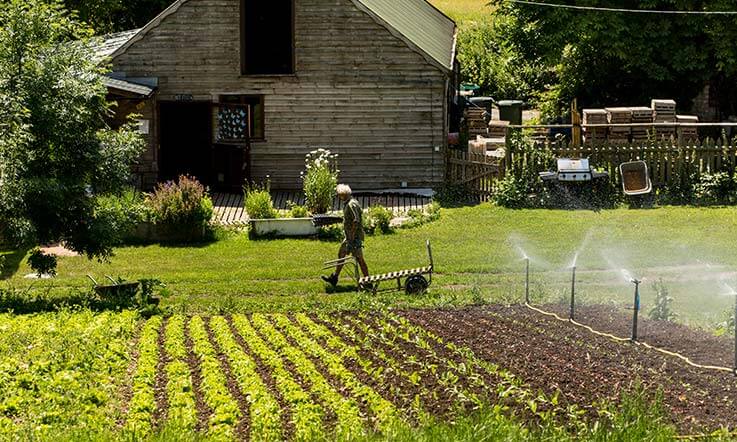
Farms such as Shimpling Park Farm in Suffolk are already showing how organic production can work at scale, helping to regenerate soils, cut carbon emissions and encourage wildlife, while supporting neighbouring farms to produce organically and building a profitable farm business.
Environment Secretary Dame Angela Eagle said:
“People are buying more organic food, and we want English farmers to be in a strong position to respond to that demand.
“Our Organic Action Plan for England is about opening up opportunities across the sector, from backing farmers already producing organic food to helping others decide whether it could work for their businesses.
“Demand for organic food is growing. By strengthening the market here at home, we can help more English farmers benefit from the demand on our shelves.”
The plan puts the Government’s commitment in the Farming Roadmap to 2050 into action, giving farmers greater confidence to invest in profitable and resilient businesses.
It also recognises the potential benefits of organic farming for soil health, biodiversity, water quality and animal welfare, while respecting that farmers will choose the production systems that work best for their businesses.
For shoppers, this means more organic choice on supermarket shelves, in local shops and restaurants, with more of it grown in England.
Dr Julia Cooper, ORC Principal Researcher Soil, said:
“It’s great to see the OAPE finally launched, demonstrating a clear intention from Defra to support organic farming in England. We currently import organic products that could be grown here, so it seems like a no-brainer to support local production. But it is also incredibly gratifying for the team at ORC to see the evidence review we worked on in 2025 listed as one of the primary sources of evidence that underpins this plan. In that project we provided a measured and balanced review of the evidence highlighting recognised benefits of organic farming for biodiversity and soil health targets, while not shying away from the tradeoffs, particularly in yields.
“In the organic sector we are always conscious that for many products organic yields are lower than conventional equivalents. There is a need to address this yield gap and hopefully this commitment from Defra will include support for research into yield-limiting factors in organic.”
“We shouldn’t be discouraged by the challenges, and must remind ourselves that since the middle of last century high-input conventional systems have been the primary target of research investment at the expense of agroecological and organic methods. We have some catching up to do and look forward to this commitment from the government to support development and growth in this sector.”
Sos Stopes, Co-chair of the English Organic Forum and Policy Advisor to Organic Farmers & Growers CIC, said:
“It is encouraging to see the OAPE published. The English Organic Forum, representing the organic sector, has worked hard with Defra on the development of a credible plan. Defra’s leadership and the positive support of the Environment Secretary Dame Angela Eagle for growth in the organic sector is a well-deserved acknowledgement of the practical ways that organic farming helps deliver the government’s environmental ambitions.”
Adrian Steele, Co-chair of the English Organic Forum and Soil Association Farming Advisor, said:
“An OAPE is a win for the UK’s food and farming system. It recognises that more organic land can help the government to deliver its wider environmental goals, from healthier soils and cleaner water to more biodiversity and less reliance on artificial inputs like pesticides. With growing consumer demand for organic often being met by imports, we have long called for a more joined-up approach that breaks down supply chain barriers and helps farmers meet that demand. England has an innovative and entrepreneurial food and farming sector, and we welcome this plan which we hope will create the right conditions for organic farmers, growers and businesses to invest and thrive.”
ORC recently completed a substantial Defra-commissioned research project (RDE707), providing evidence directly relevant to the plan:
For the organic sector, the OAPE represents an important opportunity to secure greater policy recognition, investment and support for growth. However, translating these ambitions into practical support for producers and supply chains will be critical.