
As the Liveseeding project comes to an end Christian Gossel looks back at the insights gained from conducting decentralised strip trials of multiple organic winter wheat varieties. While these trials were conducted throughout Liveseeding, they have their origins in the Liveseed project and subsequently LiveWheat.

The motivation for the trials is a lack of information on wheat varieties bred for organic systems in existing variety testing systems such as AHDB’s Recommended List. Growing in an organic system can come with additional challenges compared to conventional systems so having access to relevant information and resources suited to these systems is crucial to both support newcomers and allow existing organic farms to thrive.
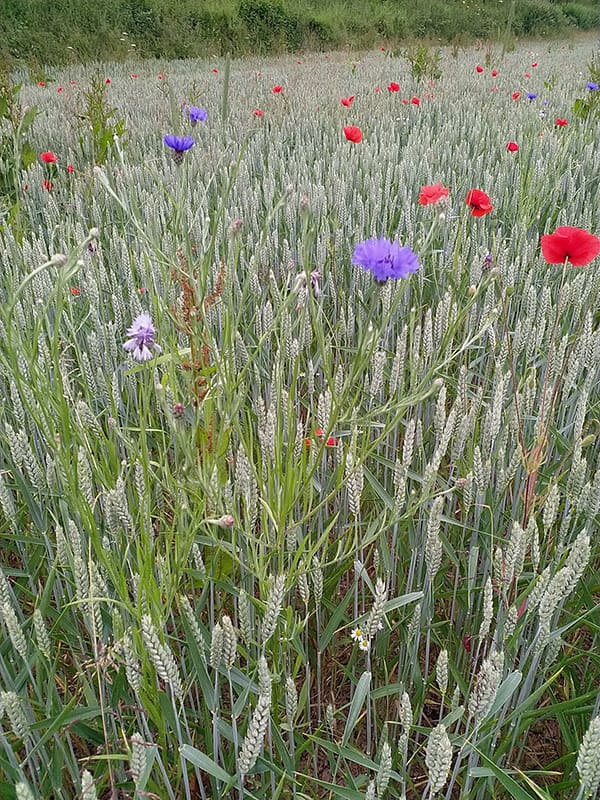
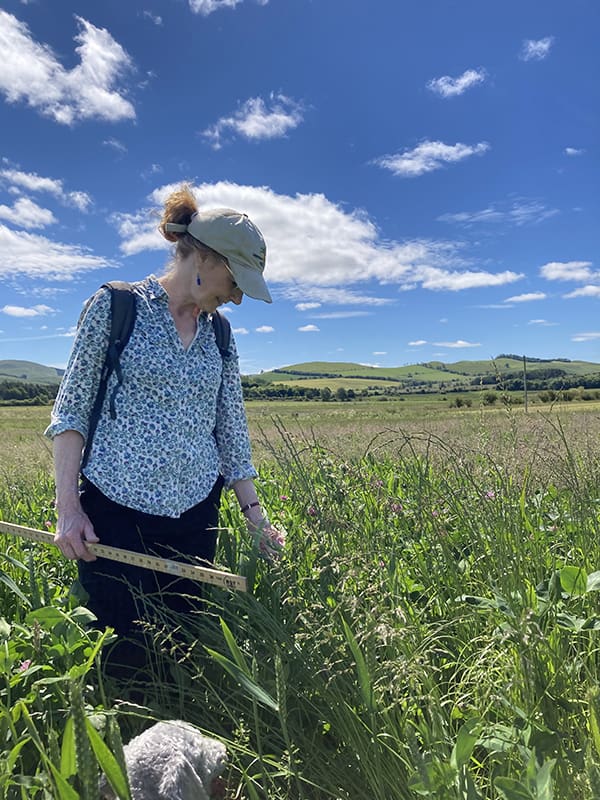
Over eight years, in partnership with Organic Arable and Cope Seeds, we tested 63 different varieties, blends, and populations across 31 farms. Each year we assessed the plant condition for disease, vigour, and weed suppression, as well as gathering grain yield and nutrient data. Across the years we also saw a wide range of weather conditions, with hot and dry summers, wet and cold springs, and everything in between.
Coming out on top, in terms of grain yield, were a blend of Mayflower and Extase, Redwald, and Mayflower, although there was significant variation between years particularly in response to weather conditions. We were also able to identify the traits that a well performing organic wheat variety needs to maximise grain yield, namely high vigour and crop ground cover at flowering. This makes sense given the increased weed burden on organic farms compared to conventional farms, requiring the crop to be more competitive. A taller crop, however, is not necessarily better and instead a wider crop that can cover more ground is well suited to organic systems. Interestingly, disease was not a major factor in determining grain yield in comparison to weed coverage, although this may vary depending on individual farm conditions.
These findings can then inform blend and population selection, particularly relevant given the increasingly variable weather projected for the coming decades. Some varieites, such as Extase, tend to be a reliable yielder across different weather conditions but suffer from weed suppression. Others, like Mayflower, have potential to reach high yields if the weather is right but can also suffer losses. Crucially, however, Mayflower tends to be a good suppressor of weeds. By combining the two we are able to get the best of both worlds, the potential for high yields in some years and a reliable yield thanks to sufficient weed suppression in other years.
Overall, the approach of decentralised, participatory winter wheat trials has been very successful in generating insights into the unique challenges of organic systems. Organic farmers are now getting the tools and information needed to select an individual variety or develop a wheat blend suited to their conditions, providing greater reliability in yields in what is becoming increasingly unreliable growing conditions. Liveseeding has been crucial in continuing this journey and making the findings available for all.
To find out more about the results from these trials, read the ORC Liveseeding Summary Report.